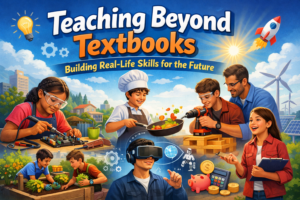

What if the true success of teaching is not measured by exam scores, but by the curiosity students carry with them long after they leave the classroom?
In a world that is constantly evolving, knowledge has a shorter shelf life than ever before. New technologies emerge, industries transform, and skills that are relevant today may become outdated tomorrow. In this reality, the ability to keep learning is not just an advantage, it is essential. Teachers are in a unique position to shape this ability, not just by delivering content, but by nurturing a mindset that values growth, exploration, and continuous learning.
Curiosity Begins with the Teacher
Students are deeply influenced by what they observe. When a teacher shows genuine interest in learning, it sets a powerful example. Asking thoughtful questions, exploring ideas beyond the textbook, and openly acknowledging when they do not have all the answers can inspire students to adopt the same mindset.
A teacher who demonstrates curiosity shows students that learning is not limited to a classroom or a syllabus. It becomes a lifelong journey. This subtle shift can change how students perceive education, from something they are required to do, into something they want to pursue.
Turning Questions into the Heart of Learning
Many classrooms focus heavily on answers, but meaningful learning often begins with questions. When students are encouraged to think critically, challenge ideas, and explore different perspectives, they become active participants in their own education.
Instead of immediately providing solutions, teachers can create space for students to think. Questions like “What do you think?” or “Why might this happen?” encourage deeper engagement. Over time, students begin to ask their own questions, and that is where real learning starts to take shape.
A classroom that values inquiry over memorization builds thinkers, not just test takers.
Making Learning Relevant and Meaningful
One of the most common challenges in education is helping students see the relevance of what they are learning. When lessons feel disconnected from real life, motivation tends to drop.
Connecting concepts to everyday experiences, current events, or future opportunities can make a significant difference. When students understand how a topic applies to the world around them, they become more interested and invested.
Relevance transforms learning from an obligation into something meaningful. It encourages students to explore beyond what is required, which is a key step toward developing lifelong learning habits.
Creating a Safe Environment for Growth
Fear can limit a student’s willingness to learn. When students are afraid of making mistakes, they are less likely to take risks or try new approaches. This can prevent them from fully engaging with the learning process.
A supportive classroom environment can change this dynamic. When mistakes are treated as opportunities to learn rather than failures, students feel more confident to participate. Encouraging effort, recognizing improvement, and fostering a sense of psychological safety can have a lasting impact.
When students feel safe, they are more willing to explore, question, and grow.
Encouraging Ownership of Learning
When students take ownership of their learning, their level of engagement increases significantly. Giving them opportunities to make choices, whether in topics, projects, or methods of learning, can foster a sense of responsibility and independence.
This does not require a complete overhaul of teaching methods. Even small changes, such as allowing students to select a project topic or explore a concept in their own way, can make learning more personal.
Ownership creates a sense of purpose. When students feel that their learning journey belongs to them, they are more likely to continue it beyond the classroom.
Using Technology to Empower Learning
Technology has become an integral part of modern education. It offers access to a vast range of information and resources, making it easier for students to explore topics independently.
However, the effectiveness of technology depends on how it is used. When integrated thoughtfully, it can enhance learning experiences, encourage exploration, and support self directed learning. It can connect students to global perspectives and provide opportunities to learn at their own pace.
Guiding students on how to use technology effectively is just as important as introducing them to it. When used well, it becomes a powerful tool for lifelong learning.
Building a Culture That Celebrates Learning
The overall environment of a classroom plays a crucial role in shaping attitudes toward learning. A space where ideas are respected, questions are welcomed, and curiosity is encouraged creates a positive learning culture.
In such an environment, students feel valued and motivated. They are more likely to engage in discussions, share their thoughts, and explore new ideas without hesitation.
This kind of culture does not just impact academic performance. It influences how students approach learning in all areas of life. They begin to see learning as something enjoyable and worthwhile.
The Lasting Impact of a Teacher
The influence of a teacher extends far beyond lesson plans and textbooks. It is reflected in the habits students develop, the confidence they build, and the mindset they carry into the future.
A teacher who inspires curiosity, encourages exploration, and supports growth leaves a lasting impression. Students may forget specific lessons, but they rarely forget how a teacher made them feel about learning.
That feeling can shape their relationship with knowledge for years to come.
A Thought to Reflect On
Think about a teacher who made a difference in your life. Chances are, it was not just what they taught, but how they taught it. Perhaps they encouraged you to think differently, supported you when you struggled, or sparked an interest that stayed with you.
That is the kind of impact that defines lifelong learning.
A teacher’s role is not just to prepare students for exams, but to prepare them for a future that requires constant learning and adaptation. By fostering curiosity, encouraging independence, and creating a supportive environment, teachers can inspire students to continue learning throughout their lives.
Because the true success of a teacher is not measured by grades, but by the lifelong curiosity they ignite in their students.
Have a story about a teacher who inspired you? Share it on LinkedIn and tag us to continue the conversation.